Computer Vision with OpenCV 3 and Qt5 True(MOBI)
This post was published 5 years ago. Download links are most likely obsolete. If that's the case, try asking the uploader to re-upload.
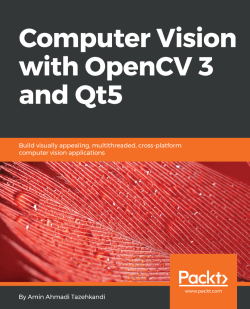
English | January 2, 2018 | ISBN: 9781788472395 | 448 pages | True (Mobi) + Codes | 56.0 MB
Key Features
Start creating robust applications with the power of OpenCV and Qt combined
Learn from scratch how to develop cross-platform computer vision applications
Accentuate your OpenCV applications by developing them with Qt
What You Will Learn
Get an introduction to Qt IDE and SDK
Be introduced to OpenCV and see how to communicate between OpenCV and Qt
Understand how to create UI using Qt Widgets
Know to develop cross-platform applications using OpenCV 3 and Qt 5
Explore the multithreaded application development features of Qt5
Improve OpenCV 3 application development using Qt5
Build, test, and deploy Qt and OpenCV apps, either dynamically or statically
See Computer Vision technologies such as filtering and transformation of images, detecting and matching objects, template matching, object tracking, video and motion analysis, and much more
Be introduced to QML and Qt Quick for iOS and Android application development
About
Developers have been using OpenCV library to develop computer vision applications for a long time. However, they now need a more effective tool to get the job done and in a much better and modern way. Qt is one of the major frameworks available for this task at the moment.
This book will teach you to develop applications with the combination of OpenCV 3 and Qt5. This book will teach you to create cross-platform computer vision applications. We’ll begin by introducing Qt, its IDE, and its SDK. Next you’ll learn how to use the OpenCV API to integrate both tools, and see how to configure Qt to use OpenCV. You’ll go on to build a full-fledged computer vision application throughout the book.
Later, you’ll create a stunning UI application using the Qt widgets technology, where you’ll display the images after they are processed in an efficient way. At the end of the book, you’ll learn how to convert OpenCV Mat to Qt QImage. You’ll also see how to efficiently process images to filter them, transform them, detect or track objects as well as analyze video. You’ll become better at developing OpenCV applications.
Homepage
Without You And Your Support We Can’t Continue
Thanks For Buying Premium From My Links For Support
Click >> Here & Visit My Blog Daily For More Udemy Tutorial. if You Need Update or Links Dead Don't Wait, Just PM Me or Leave Comment at This Post
Quick check before we show the links
Helps us keep automated scrapers from hammering the filehosts.